![[campubl] e magazine brandbook (1)](https://purple.campubl.com/wp-content/uploads/2025/08/cropped-CAMPUBL-E-Magazine-Brandbook-1-1-50x70.png)
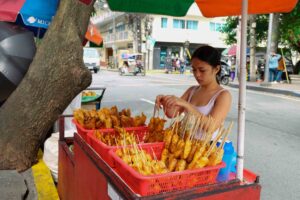
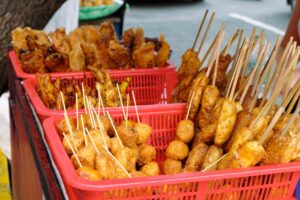
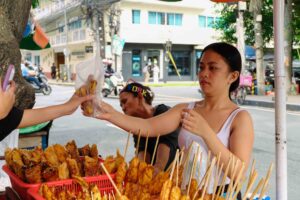
As the afternoon rush sets in, Estrada Street fills with the scent of caramelized sugar. Banana skewers sizzle in hot oil under the glistening sun while Nadine works behind her modest cart, preparing the rest of her goods. Beside her, the newly hired Tarhata keeps an eye on Nadine’s lively toddler, who watches the steady stream of customers with wide-eyed curiosity. A fresh batch of turon slips into the boiling oil, the sugar turning golden and clinging in sweet, sticky layers. This rhythm has carried Nadine through three years of work—more than just selling snacks, it’s about building a life one skewer at a time.
In 2022, Nadine and her husband began selling a variety of treats: banana cue, kamote cue, turon, and karioka. At first, they didn’t own a cart, only sharing space with a nearby food vendor. Eventually, they decided to get their own cart and sell their treats independently. “Andito kami dati,” Nadine said, pointing to the cart next to them. “Nakikihati pa lang kami.” (“We used to be here before, she explained, just sharing their cart.”).
And so, Nadine’s food cart was born—a small but steady presence on Estrada Street. Their work begins long before the first skewer hits the fryer. The night before, she and her husband weave through the crowded stalls of Divisoria, searching for the best bananas and freshest ingredients at an affordable price.
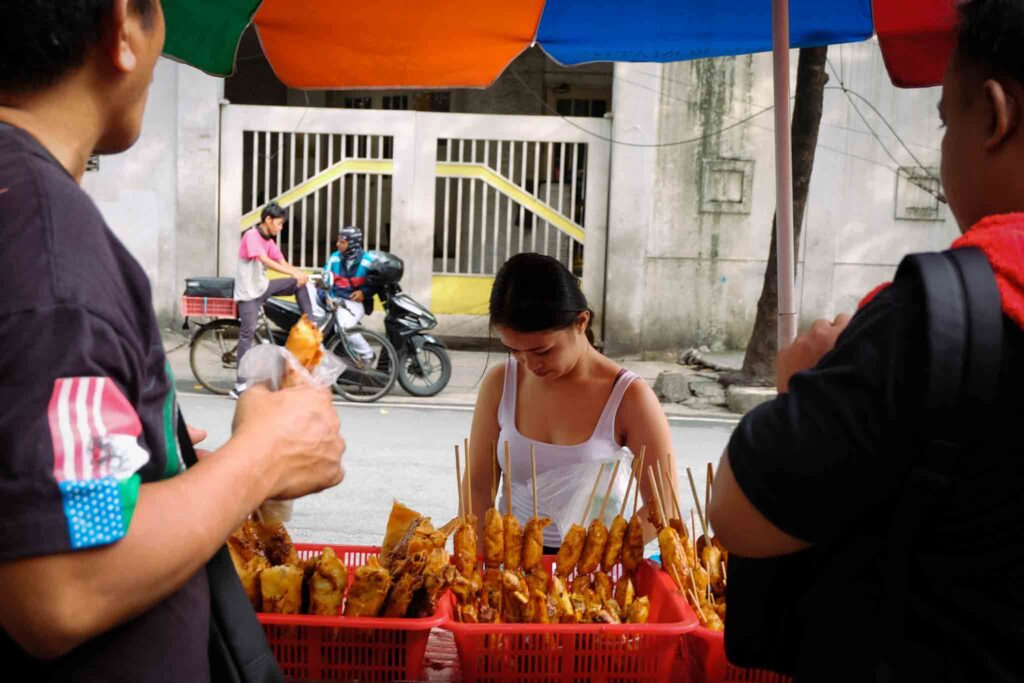
At 6 a.m., Nadine readies the ingredients in their kitchen: sliding thick banana slices onto wooden skewers, rolling glutinous rice into smooth, compact balls for karioka, and laying out sheets of lumpia wrapper for turon.
By 7 a.m., her husband mans the cart. Oil crackles as the first batch of bananas is lowered in, the sugar slowly melting into a golden glaze that clings to each skewer. Karioka balls turn crisp and golden brown, while turon sizzles until its wrapper blisters and glistens.
Living just steps away from their usual spot keeps this daily rhythm smooth and efficient. By 3 p.m., the street was crowded with students, workers, and locals drawn by the promise of a quick, sweet merienda. The cart becomes a crossroads of cravings. “Salo-salo na ’yan kahit sino na,” (“It’s a mix of customers.”), Tarhata said.
They pack up at 6 p.m., ready to do it all again tomorrow. But the rhythm isn’t always smooth. Their cart, a familiar sight on Estrada Street, stands on borrowed ground—the city government forbids vendors from operating there. Once, officials even hauled it away. “May naninita po [City Hall]. Nakuhaan na rin po kami ng kariton,” (“City Hall forbids us to sell here. We even had our cart confiscated.”), Nadine said.
The warnings come without solutions, leaving them to walk the thin line between survival and regulation. Selling through holidays, they keep the grind going, anchored by the neighborhood that has embraced them. Still, Nadine hopes for more stability in the future, free from government pressures. Until then, her quiet resolve keeps the oil hot and the skewers turning.