![[campubl] e magazine brandbook (1)](https://purple.campubl.com/wp-content/uploads/2025/08/cropped-CAMPUBL-E-Magazine-Brandbook-1-1-50x70.png)
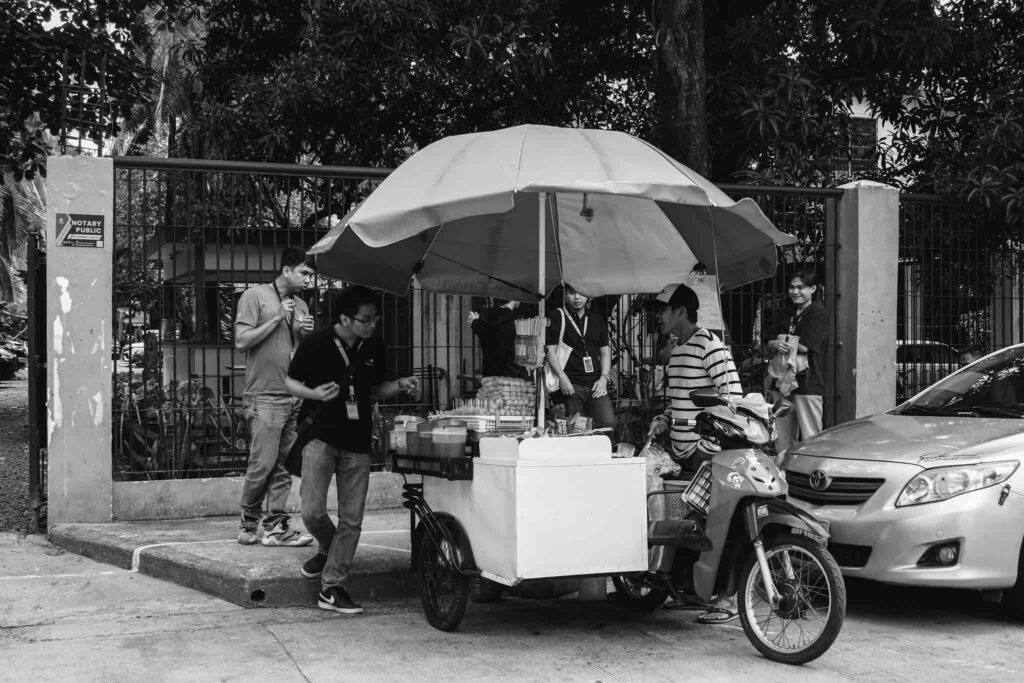
In Manila’s urban life, street vending exists beyond as a source of income. It plays a pivotal role in sustaining both vendors and the communities they serve. This line of work provides affordable food, quick convenience for students and residents, and builds everyday connections that keep neighborhoods vibrant. Yet despite its cultural and social significance, street vending remains in a legal gray area which often leaves vendors exposed to raids, permit complications, and abrupt shifts in government policy.
On July 1, 2025, Manila Mayor Isko Moreno launched a sweeping cleanup operation across the city. Specifically, it aims to clear away garbage, encroachments, and vendors blocking pedestrian paths along Divisoria and other major streets. Days later, he issued a strict enforcement directive for the city’s Zero Vendor Policy in areas such as Blumentritt, Avenida, Plaza Miranda, Carriedo, and Padre Faura calling for streets to be clean, safe, and more walkable.
While these efforts seek to restore order and hygiene in crowded spaces, they also push many street vendors toward displacement. Considering that most street vendors earn an honest living, declaring street vending as illegal overlooks its crucial role in the informal economy and its contributions to urban culture and development.
To arrive at inclusive policies, it is essential to challenge the traditional perceptions of street vending and street food, both as a culture and practice. Many Filipinos still view street food as unsanitary or “dirty,” evident in the ways we casually label certain food, such as “dirty ice cream.” However, food safety studies and permit processes often show that vendors who comply with hygiene standards can be as safe as formal food establishments. Reframing this mindset is important if we want to move toward solutions that recognize street vending as both a legitimate enterprise and a valued cultural tradition.
Beyond legal actions, what can we do to support our street vendors? Through simple ways, we can treat street food with the respect it deserves. Its existence is a testament to Manila’s (and the Philippines’) cultural richness. We can deepen our connection to our community by getting to know the vendors and their families, or by joining advocacy campaigns that aim to uplift their livelihoods. Staying informed about legislation, such as the Magna Carta for Informal Vendors, helps ensure we understand the policies that shape their work.
Street vendors are more than just people selling food along the busy streets of Manila. While some may view them as those who “block the roads,” they are, in truth, our neighbors, cultural bearers, and an essential lifeline in urban living. Policies, as much as they are implemented to keep urban cities in order, should protect the public and their livelihoods. With the right structural support, street vendors can continue serving us, and we can show them the respect they have long earned and worked for.